PART ONE: THE CONSTRAINT
In February 2026, a young designer walked into New York Fashion Week wearing something that should not have existed.
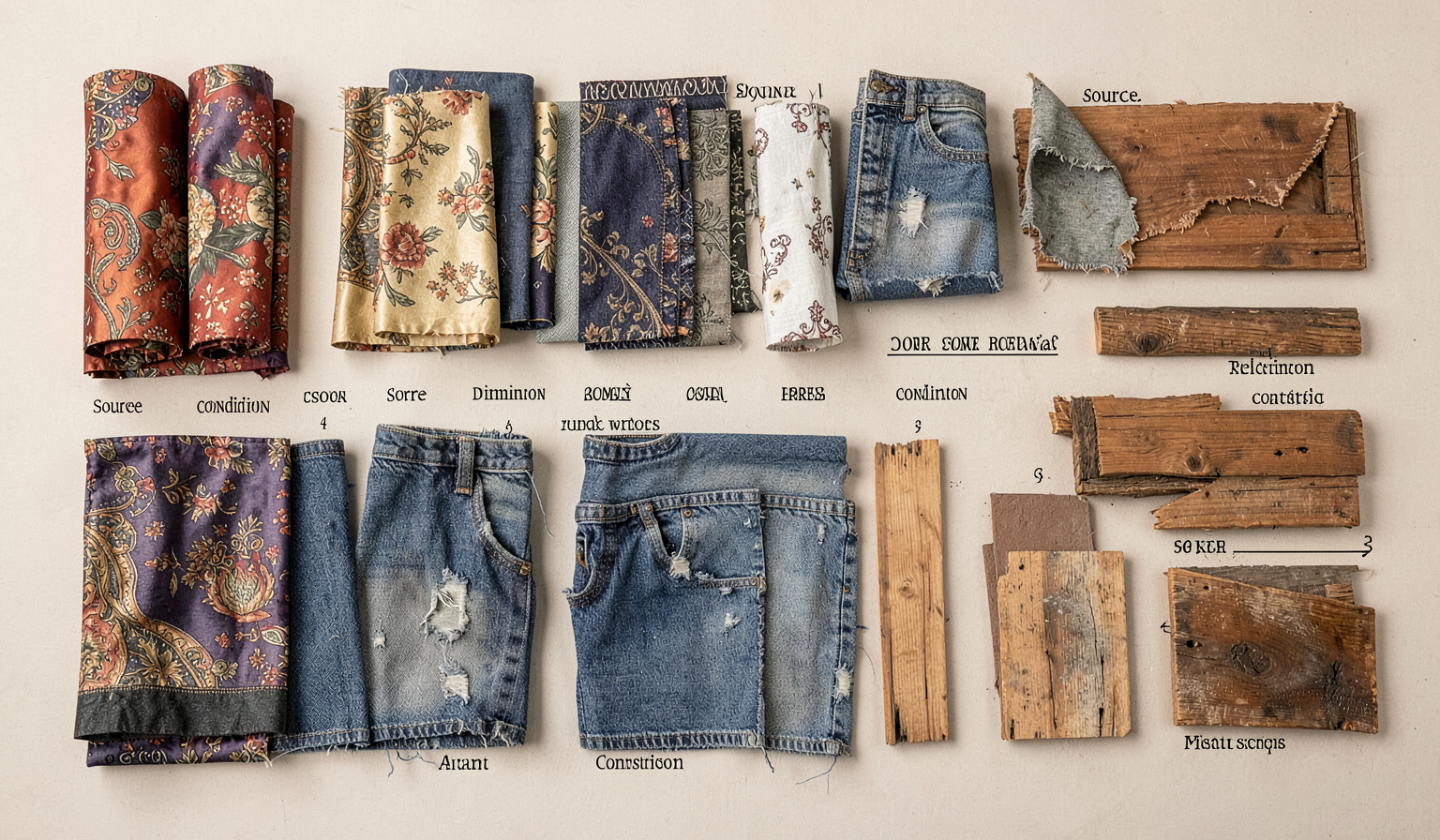
The jacket was constructed from fragments—vintage Japanese kimonos, damaged beyond conventional use, purchased from textile salvage. The construction was precise. The visual language was urgent. It announced nothing about sustainability. It simply presented itself as a complete formal object: this is what I made from what already existed.
The designer was Junko Shibuya. The brand is OUNCHAN. The approach contains a principle that three separate Japanese creators have independently discovered.
They do not treat discarded materials as ethical problems to solve.
They treat them as creative authority—the specification that determines what the work will be, how it will be made, and why the form matters.
This inverts the entire conventional frame.
In mainstream design discourse, waste appears as a regrettable byproduct. The designer's heroic intervention rescues it, repurposing discarded material into something valuable. The narrative centers on the designer's moral clarity: I saved something. I made it meaningful again.
These three practitioners operate inside the opposite logic.
Junko Shibuya does not work with damaged kimonos. She works from them. The existing damage, the existing pattern, the existing history of the textile becomes the brief. The designer's task is not to rescue the material. It is to discover what form the material requires.
This is not restraint. This is permission.
"I don't choose the materials," one designer explained. "The materials choose me. And when the material chooses you, it knows what you need to make."
The difference is not semantic. It produces visibly different work.
PART TWO: THREE SIGNALS
SIGNAL ONE: JUNKO SHIBUYA / OUNCHAN
Junko Shibuya began OUNCHAN with a single premise: wearing memory.
The brand specializes in one-of-a-kind jackets and dresses constructed from vintage Japanese kimonos—textiles with existing use, existing patterns, existing histories embedded in the material itself.
The construction method is what transforms constraint into formal invention.
OUNCHAN employs 3D cutting combined with precision patternmaking. The existing pattern of the kimono is not hidden or obliterated. It is redistributed across the new form. A single piece might contain three different kimono patterns, visible simultaneously, in conversation with each other.
The seams become visible. The historical construction of the kimono—the way it was made centuries ago—becomes legible inside the contemporary garment. The old and new are not layered in sequence. They occupy the same surface.

This could be read as postmodern collage. It is more precise than that.
Each garment is a one-off. No two pieces are identical because no two kimonos present identical damage, pattern distribution, or material condition. The designer cannot mass-produce. The designer must respond to the specific material at hand.
What emerges is a formal language that industrial production could never generate. The garments photographed at NYFW FW26 contained visual complexity that arose specifically from working within material constraint—not despite it.
This is the first evidence: constraint does not produce simpler forms. It produces stranger, more formally specific forms.
SIGNAL TWO: MAYU KAMURA / QUIITO
Mayu Kamura spent years planning design for ISSEY MIYAKE—working inside one of Japan's most rigorous systems of formal precision and industrial specification.
Then she walked into a secondhand clothing warehouse and saw a pile of used denim destined for waste.
The observation was simple: most jeans become unwearable not because the material fails, but because specific areas tear. The inseam wears through. The crotch area fails. The rest of the garment—the legs, the waistband, the pockets—remains structurally intact.
Conventional recycling either tears the garment apart entirely, mixing fibers into new material, or it donates it whole and hopes someone else wants damaged pants.
Mayu Kamura asked a different question: What if the damage is the specification?
QUIITO launched in Fall/Winter 2024 with a methodology that treats the worn and damaged sections as material input, not material loss.
The brand salvages specific sections of vintage denim—the usable portions—and reconstructs them into entirely new garments. The existing wear patterns remain visible. The original patina is not bleached or normalized. It is integrated as sculptural material.
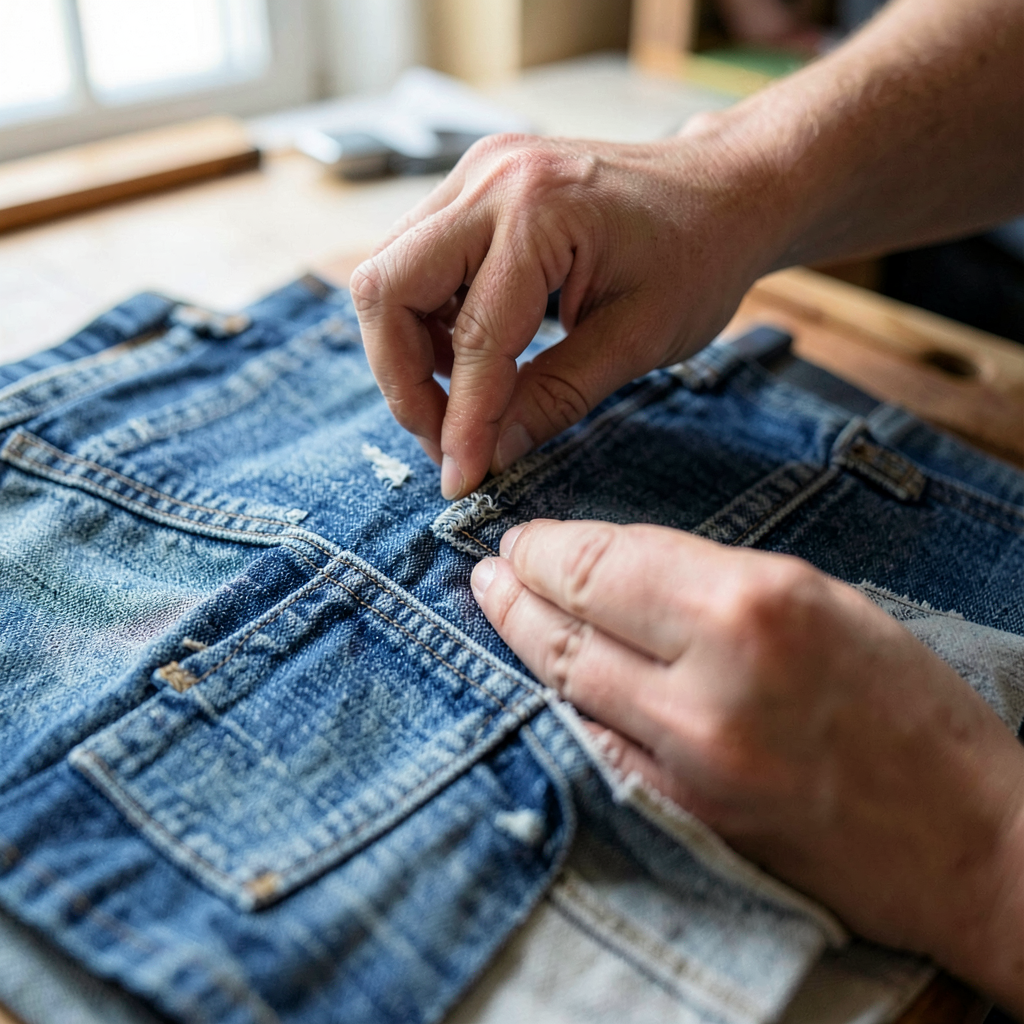
A pair of QUIITO pants might contain the crotch material from six different jeans, each with its own wear history, each with visible evidence of previous use. The visual result is something that could not exist through any conventional design process. The surface becomes a taxonomy of wear, use, time.
The pieces are unique. Each one is sewn in limited Japanese ateliers. No two garments are identical.
Here is the operative insight: the damage in the original material becomes the formal idea. The designer does not apologize for the constraint. The constraint is the creativity.
SIGNAL THREE: AKIYA COLLECTIVE / KOMORO, NAGANO
Japan has 8.5 million vacant homes.
Most of them are not abandoned randomly. They cluster in rural areas where population has declined. Aging owners left properties when they moved to cities. Heirs live elsewhere. The infrastructure remains: a structure, a roof, foundation, materials already assembled and shaped.
The Akiya Collective, founded by Michelle Huang and established as a nonprofit in 2024, acquired its first vacant house property in Komoro, Nagano in 2024.
The renovation approach rejects two conventional frameworks:
First, it refuses the historical restoration model: "restore this building to its original state, to what it was intended to be."
Second, it refuses the generic renovation model: "apply contemporary standards and modern materials, erase evidence of history and create a blank slate."
Instead, the Akiya Collective practices architectural constraint-based methodology.
The existing building is treated as the specification. Its dimensions, its materials, its structural condition, its spatial relationships—all of these are constraints that the redesign must work within rather than against.
The first renovated folk house in Komoro now serves as a makerspace and creative residency. The renovation visibly preserves architectural evidence. Original wooden beams remain exposed. The spatial proportions dictated by the building's existing geometry inform the design of contemporary use.
The result is a space that could not have been produced through unlimited design freedom. It exists precisely because the designer was constrained by the material reality of what already existed.

The building was not "restored." It was reconstructed—transformed into something new by working inside the limits of what was already there.
The Akiya Collective has grown from one property to stewardship of 5 houses in Komoro, with 5 additional properties purchased by members in other regions. The operational model treats abandoned infrastructure as creative material rather than urban failure.
PART THREE: THE PRINCIPLE
What connects these three practitioners is not ideology or explicit philosophy.
They have not published a manifesto. They did not coordinate. They are not part of a named movement or school.
What connects them is methodological: they have independently arrived at a principle that inverts the relationship between constraint and creativity.
Constraint is not limitation.
Constraint is specification.
This distinction matters.
In conventional design thinking, constraint is something to overcome. The designer works against limitation, compensating through skill, innovation, conceptual ingenuity. Constraint is resistance. The goal is transcendence.
In constraint-based methodology, the limitation is the brief.
The designer works inside the constraint. The material already exists. The dimensions are already fixed. The damage is already present. The task is not to overcome this—it is to discover what form the constraint requires.
This is formally closer to constraint-based composition in music (John Cage's chance operations, the systematic rules governing fugal form) or literature (the Oulipo group using formal constraints to generate new narrative possibility) than to conventional design ethics.
It is not about saving the planet. It is not about messaging. It is not about appearing good.
It is about a method that produces stranger, more formally specific, more visually urgent work than unlimited choice generates.
The question the industry forgot to ask:
If a designer can only work with what already exists—damaged textiles, abandoned houses, salvaged materials—does the work become more constrained or more free?
The evidence suggests the answer is neither. The work becomes different. More specific. More formally complex. Stranger.
The designer is not liberated from all constraint. Constraint is simply reorganized. Instead of facing the constraint of unlimited choice (the paralysis of infinite options, the pressure to create something culturally novel, the obligation to make something nobody has ever seen before), the designer faces the constraint of material specificity.
This is what exists. This is what I must work with. What does this material require?
The answer that emerges is not compromise. It is specification.
PART FOUR: WHY THIS MATTERS NOW
These three practitioners represent something that conventional Japanese design discourse has not emphasized.
Japan's design establishment remains anchored to a particular model: precision industrial production, systematic methodology, the perfection of already-invented forms (the ISSEY MIYAKE systems approach, the automotive precision of Japanese manufacturing, the reproducibility of standardized products).
This model made Japan dominant in global design for decades.
It also assumes unlimited access to raw materials, industrial infrastructure, the capacity to begin from zero.
This assumption is becoming less available.
A younger generation of Japanese makers is working inside the opposite condition: material scarcity, abandoned infrastructure, existing constraints that cannot be overcome through capital or industrial access.
And in that constraint, they are discovering that the work is not diminished. The work is transformed.
This is not nostalgia for handcraft or preindustrial production. Junko Shibuya's precision patternmaking is as rigorous as any industrial system. Mayu Kamura's cutting and reconstructed garments demonstrate formal sophistication equal to runway fashion. The Akiya Collective's renovation methodology requires architectural understanding as deep as any institutional practice.
The difference is that these practitioners have stopped waiting for permission or infrastructure. They are not asking industrial manufacturers for materials. They are not requesting institutional patronage. They are working inside the wreckage because the wreckage contains more interesting creative possibility than the clean slate ever did.
This represents a shift in how authority is claimed in Japanese creative practice.
Authority no longer derives from access to pristine materials, institutional affiliation, or the ability to begin from zero.
Authority derives from what you can discover inside constraint.
PART FIVE: THE OPEN QUESTION
The essential question the investigation surfaces is not yet answered:
Does constraint-based methodology produce formally more complex results because of the constraint, or is the complexity merely different?
This requires comparative analysis. Visual investigation. Formal analysis of the work itself.
The proposal suggests that constraint produces greater formal complexity. The evidence is suggestive but not conclusive.
What is clear: the work emerging from these three practitioners demonstrates visual and formal properties that industrial design with unlimited material choice produces rarely, if ever.
Whether this is causation or correlation remains an open question.
What is also clear: the designers themselves do not experience the constraint as limitation. They experience it as permission.
"When the material is already broken," one designer noted, "you stop trying to make it perfect. You start trying to make it true. And truth is stranger than perfection."
This is the insight that drives the work.
Not ethics. Not sustainability messaging. Not cultural nostalgia.
Simply: the recognition that what is already broken contains more creative possibility than what has never been touched.
PART SIX: THE EVIDENCE
The work is photographable. The work is visible. The work is international (NYFW FW26 for OUNCHAN; multiple retailers carrying QUIITO; institutional recognition for the Akiya Collective including the O'Shaughnessy Fellowship).
The work is real.
What remains to be investigated through direct contact with the practitioners:
- Whether constraint-based methodology is consciously articulated philosophy or intuitive practice
- Whether these three practitioners recognize each other or have independently discovered similar methods
- The relationship between economic necessity (limited resources) and formal innovation (strategic choice)
- How the work is received and whether international visibility is driven by formal innovation or by Western sustainability narratives
- Whether this represents a generational shift or remains isolated to individual makers
- The comparative formal analysis of work produced through constraint versus work produced with unlimited material access
The story exists. The investigation is ready.
The question that matters: Why has nobody asked this before?